
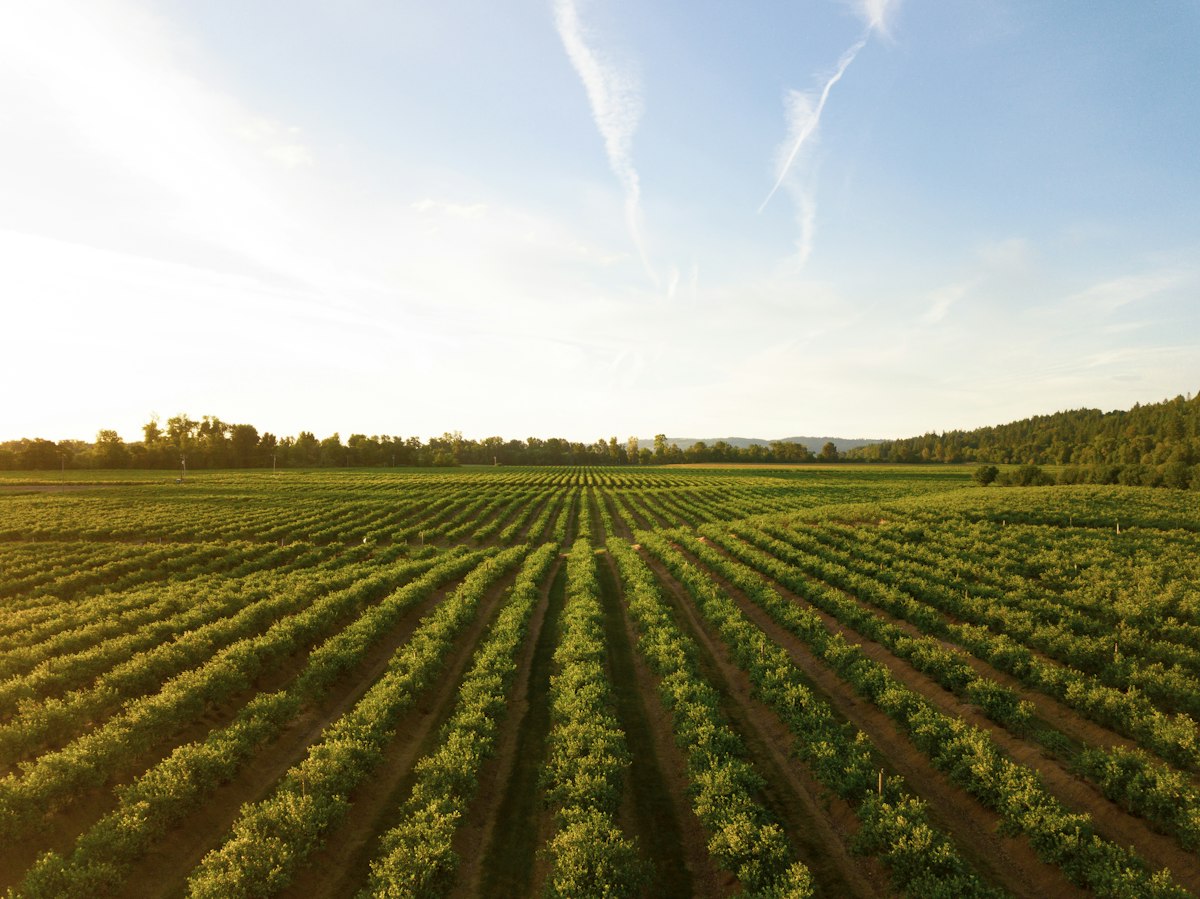
ESG reporting in the food and beverage sector is defined by one structural reality: the most significant environmental and social impacts occur not in factories or distribution centres, but in agricultural supply chains that often span multiple continents. Deforestation linked to soy, palm oil, beef, and cocoa production; water extraction in water-stressed catchments; and labour conditions for seasonal agricultural workers sit at the centre of any credible food sector ESG disclosure. CSRD makes these disclosures mandatory for in-scope companies.
Deforestation and the EU Deforestation Regulation
The EU Deforestation Regulation (EUDR), which came into force in 2023, requires companies placing specific commodities — cattle, cocoa, coffee, palm oil, soy, wood, rubber, and derived products — on the EU market to conduct due diligence to ensure they are not linked to deforestation or forest degradation after December 31, 2020. For food and beverage companies, this is not just an ESG reporting consideration — it is a market access requirement. ESRS E4 (Biodiversity and Ecosystems) further requires companies to disclose land-use impacts and policies for protecting high-value ecosystems in agricultural supply chains.
Free Resource
Get Enable Good's guides in your inbox
Practical sustainability know-how, no spam. Or jump straight to the free readiness tools.
Water Risk: A Material Issue for the Sector
Water is the most material environmental issue for many food and beverage businesses, yet it remains systematically under-reported. Under ESRS E3 (Water and Marine Resources), companies must disclose water consumption in water-stressed areas, water intensity per unit of production, and policies for water stewardship across their supply chains. For beverage producers with operations in drought-prone regions, and for food processors dependent on irrigated agriculture, these disclosures carry significant financial risk implications. The CDP Water Security questionnaire, widely used in the sector, provides a useful framework for building the data collection systems needed for ESRS E3 compliance.
Agricultural Supply Chain Labour Standards
Seasonal agricultural labour, smallholder farmers, and migrant workers represent some of the highest-risk workforce categories in European supply chains. Under ESRS S2 (Workers in the Value Chain), food and beverage companies must assess and disclose the labour rights conditions of workers in their agricultural supply chains — including issues such as living wages, child labour risk, freedom of association, and health and safety. The Ethical Trading Initiative (ETI) Base Code and the UN Guiding Principles on Business and Human Rights (UNGPs) provide the normative frameworks for this assessment.
Scope 3 Emissions in Agriculture
Agricultural production is responsible for approximately 10 to 12 percent of global greenhouse gas emissions — predominantly methane from livestock and nitrous oxide from fertiliser use. For food companies with significant livestock, dairy, or fertiliser-intensive crop supply chains, Scope 3 Category 1 (purchased goods) emissions from agriculture typically represent more than 80 percent of their total carbon footprint. The Science Based Targets initiative (SBTi) has developed FLAG (Forest, Land and Agriculture) guidance specifically for food and beverage companies setting science-based targets — a growing expectation from investors and major retail customers.
Building a Food Sector ESG Report
- Conduct a double materiality assessment with specific attention to upstream agricultural impacts
- Map high-risk commodity supply chains and geo-locate production origins
- Implement EUDR due diligence systems for relevant commodities
- Collect water consumption data across own operations and flag water-stressed sites
- Assess supply chain labour conditions using the ETI Base Code or equivalent
- Calculate Scope 3 Category 1 emissions using supplier-specific or spend-based methods, with a roadmap to improve data quality
- Set science-based targets including FLAG methodology for land-related emissions